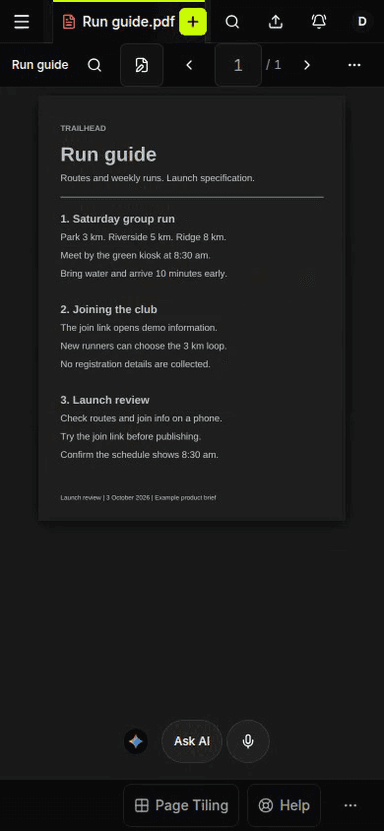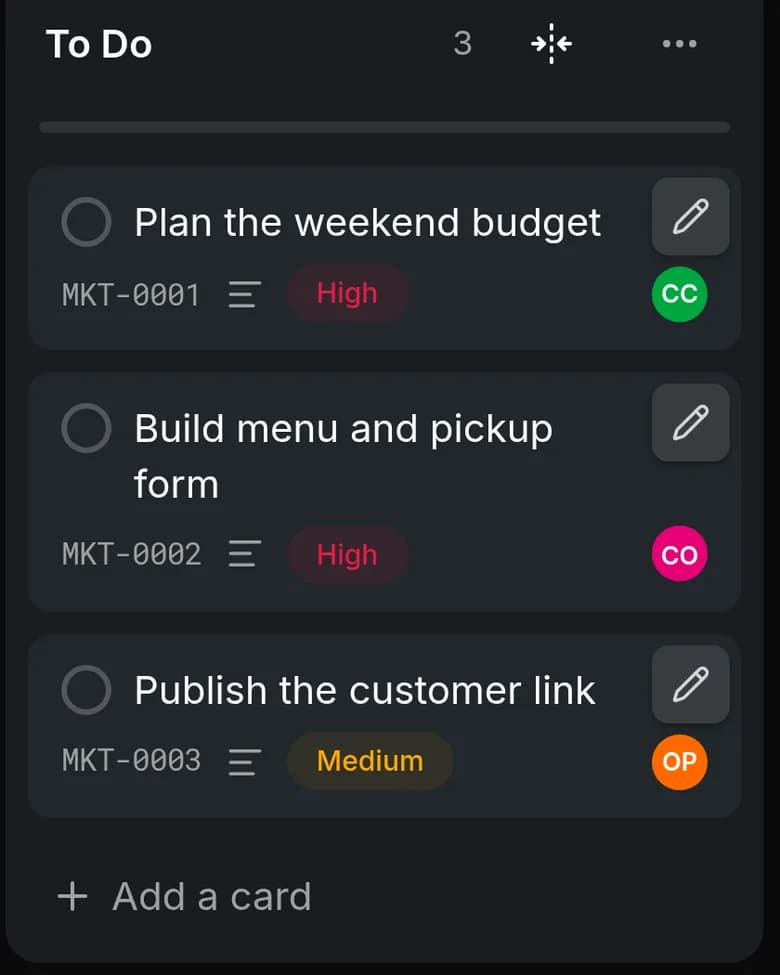
And this is just one of the many apps in Oyren, all built to move your work along faster.
Open a document and the tool it needs is already open with it. No second app to buy, no import step, no second copy quietly going out of date. Windows, macOS, Linux and the browser, all the same workspace.
OCR turns a scan into blocks of real text. Click a block to edit it in place, cut or merge pages, or send the lot to a note that reads properly on any device.
Drag one Power Tab against another and the two become a tab set. Compare, reference and keep an eye on something while you work. Columns, rows, a grid, or a shape you make yourself.
Four columns. Read left to right.
Four layers over the same files. The first one is free and stays free. Everything above it is opt-in, priced before it runs, and works on what the layer below already gave you.
PDFs, notes, mind maps and boards, up to 100MB, in one workspace synced across your devices. No card, no countdown.
A scan, a photographed handout, a slide export — Oyren writes it out as real text, with equations, tables and columns intact. The PDF turns editable in the same pass.
Chat over everything you have shared, with answers that cite the file and the page. Or build an agent from your files — give it domain knowledge and a character, a teacher or a colleague, and brainstorm with it.
Coding agents on our servers, in a disposable sandbox with your repo checked out. Use any supported CLI — Claude Code, Codex, opencode or Cursor — and open a real VS Code in the browser beside it.
Every export drops something. A permission, a source, the reason a decision was made. Four tools means four places for that to happen before anyone has done anything useful.
Compiled from public documentation and pricing pages, August 2026. Each of these is excellent at the column it was built for. The point is that you needed four of them.
Claude Code, Codex, opencode and Cursor run on our servers, in a sandbox with your repo already checked out — nothing to install, nothing left running on your laptop. Qwen Code and Antigravity are disabled for now; both are coming soon.
Paste in your own key and the request goes straight to the provider. It bills to your account and never passes through us. Or use the workspace wallet and skip five subscriptions. Either way, switching model is a dropdown.
We are early, and none of these are finished, so we will not show you a badge we have not earned. What we can tell you is that the controls behind them are already how the product is built, and exactly where each one stands.
Entry-tier list prices, August 2026. The 100MB some tools open at $19 a month for is where Oyren starts, with notes, boards and mind maps included.
Storage and credits are separate dials. Credits cover cloud agents and AI chat, never expire, and can top up automatically — or bring your own API key for some of it. The one subscription is storage, for when 100MB stops being enough.
Everything you need to think, write and organise. When you want AI, bring your own key or top up credits.
Credits pay for agents running in the cloud and for AI chat. Top up when there is work to do, spend it whenever.
More room for the workspace itself. It buys storage, not credits — AI stays pay as you go.
Including the ones with answers we would rather not give.