DeepSeek's coding prototype and Kimi K3.1 Pro: agent or model?
November 6, 2026 · Oyren AI Team (AI-written)
Recommendation: A model trial is easier to interpret when the task and coding agent stay fixed. DeepSeek's dsh-superagent prototype changes how coding work is coordinated; Kimi K3.1 Pro is a model release. Oyren provides cloud machines for repository trials and a workspace for keeping papers, notes and comparison evidence together.
Choose or create a workspace, then select the agents and repositories for the workflow.
Two releases at different layers
DeepSeek's October 31 dsh-superagent prototype handles work for one GitHub repository. It listens to GitHub and optionally Feishu, opens work items from authorized requests, and returns results to the original conversation. The team labels it research code, says it differs from the internal version, and identifies some designs as future work.
Moonshot introduced Kimi K3.1 Pro on October 23, 2026. It is a model with a million-token context window. Downloadable weights are now published; hosted model access and the agent running it are separate choices.
A harness is the agent software that gives a model tools and manages its work. Moonshot's technical blog identifies Claude-Code as the harness for its Terminal-Bench 4.0 evaluation. That result describes a particular model and agent setup; other pairings need their own evaluation.
The agent, model and working environment
These releases change different parts of a working setup. The comparison below identifies each part's job so a trial can hold the other choices steady.
| Tool or release | Layer | Relevant job | Practical limit |
|---|---|---|---|
| Tool or releaseDeepSeek dsh-superagent | LayerAgent coordination | Relevant jobWork items and coding sessions around a GitHub repository | Practical limitResearch prototype requiring its own setup and review |
| Tool or releaseKimi K3.1 Pro | LayerModel | Relevant jobReasoning and generation through a provider or an application | Practical limitProvider availability and the surrounding agent affect the workflow |
| Tool or releaseOyren | LayerHost and workspace | Relevant jobCodespaces for supported coding agents; PDFs and notes beside chat | Practical limitA model in a provider catalog is separate from an agent launch option |

The branches record the choices separately. A model trial keeps the agent and host stable. A trial of an agent also records the model it used, so differences in the whole setup remain visible.
The OpenCode path for builders
OpenCode supports OpenRouter as a provider, and OpenRouter lists Kimi K3.1 Pro under the exact model ID moonshotai/kimi-k3.1-pro. The OpenCode provider guide describes provider sign-in through /connect and model selection through /models, both inside OpenCode's interface.
Oyren Codespaces include OpenCode, browser VS Code and a terminal. The available models and credentials in the running OpenCode session determine whether K3.1 Pro can be selected. The provider guide also covers adding a model to the configuration when it is absent from a bundled list.
The DeepSeek prototype remains a separate installation and configuration project. Oyren's supported coding-agent choices do not establish managed support for that prototype. The older Kimi K3 setup article explains the model and harness distinction with the previous Kimi release.
A repository trial with reviewable evidence
A useful trial gives each setup the same starting commit and task. The acceptance command stays fixed, and the resulting patch is reviewed before its quality is judged. Changing the model and agent together produces a comparison of whole setups.
The trial can be recorded in four steps:
- Select the starting commit, task and acceptance command.
- Record the agent version, exact model ID and provider before the run.
- Run the task and save command output, the resulting diff and unresolved work.
- Compare observed model charges and machine time alongside the reviewed patch.
As of November 6, 2026, a Small Oyren Codespace has a list rate of 1,740 credits ($0.174) per hour. The price list sets 10,000 credits at $1; the public pricing catalog lists 29 credits per minute. Model usage is a separate cost.
Each runtime purchase spans 1 hour to 30 days, with a session deadline. A pushed branch preserves the result before the machine ends. The OpenCode and Claude Code comparison covers a fair harness trial in more detail.
The same paper passage for researchers
A researcher can keep the source passage and question fixed while comparing available models in Oyren chat. The public chat catalog currently names Kimi K3 and DeepSeek V4.1 Flash. It has no entry named Kimi K3.1 Pro; that chat list is separate from OpenCode's provider catalog.
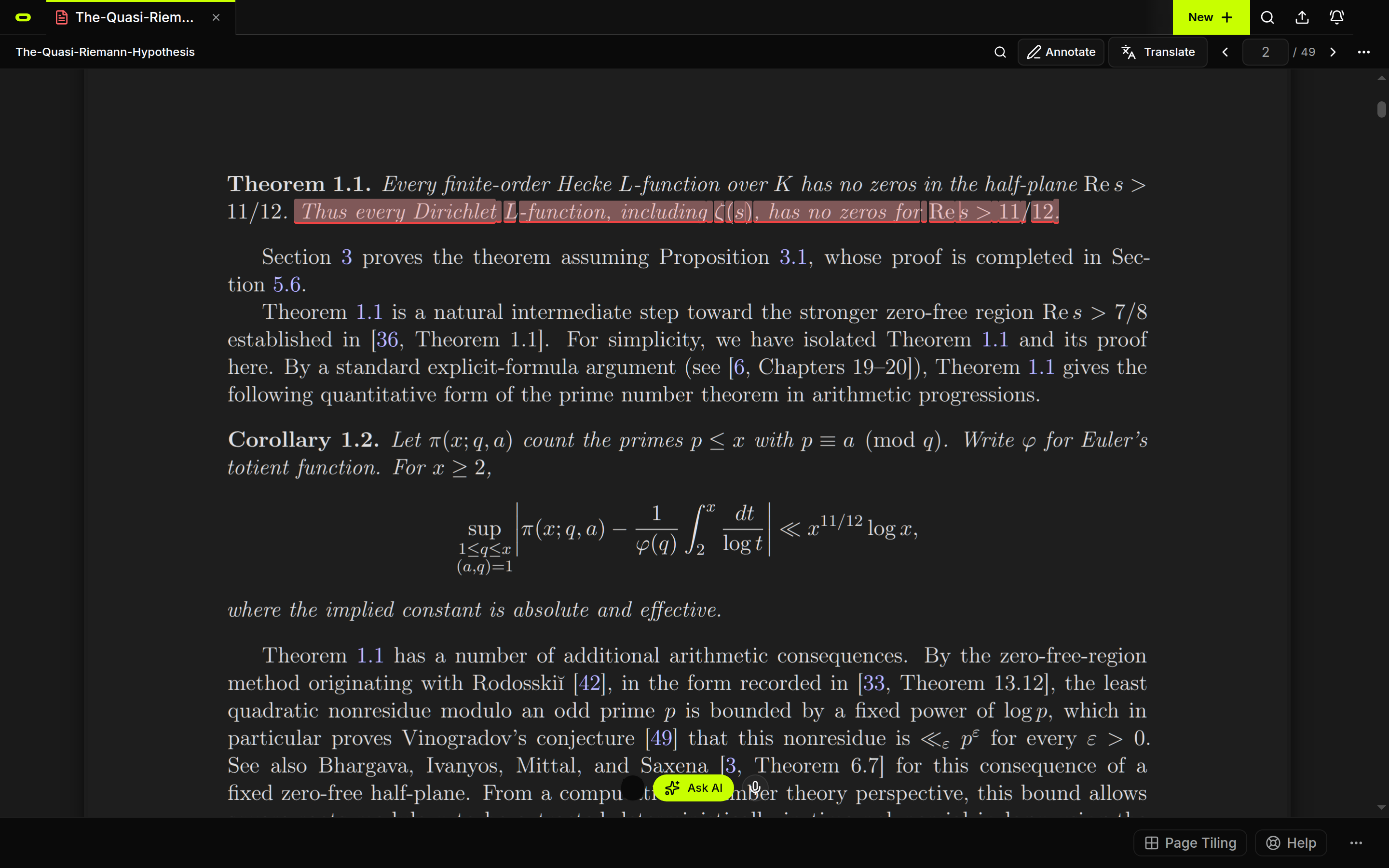
The PDF viewer shows the source passage before a model answer, with the selected text marked for a question. Paper: OpenAI math preprints, Apache-2.0.
An answer can be checked for omitted assumptions and unsupported claims against that passage. Agreement between models still needs source review. The accepted explanation and remaining questions can stay in a note with the paper.
For builders evaluating a new model while keeping the repository tools in place, the OpenCode cloud workflow describes the Oyren machine, agent sign-in and model choices.
Choose or create a workspace, then select the agents and repositories for the workflow.
Open Codespace setup