Notes, boards and cloud machines for app development.
Editable code built from an app idea
An app brief becomes a task for a coding agent on a cloud machine. The running app opens at a public URL, and its source remains available for inspection and editing. Notes and board cards keep the plan beside the build and record subsequent changes.
See plans and usage pricing
App briefs and reviewable first tasks
A first task records the action the app needs to support, who it is for and how the result will be checked. A note holds the details, while a board card holds the task and progress. This gives the initial build a concrete scope and keeps the intended result available when the app is reviewed against its brief.
Assign to agent sends a ready task to a coding agent. A card can cover a page, a small tool or a change to an existing build. Each result needs review against the brief before the next task extends the app. The board keeps those tasks and review criteria together.
Coding agents with editable source
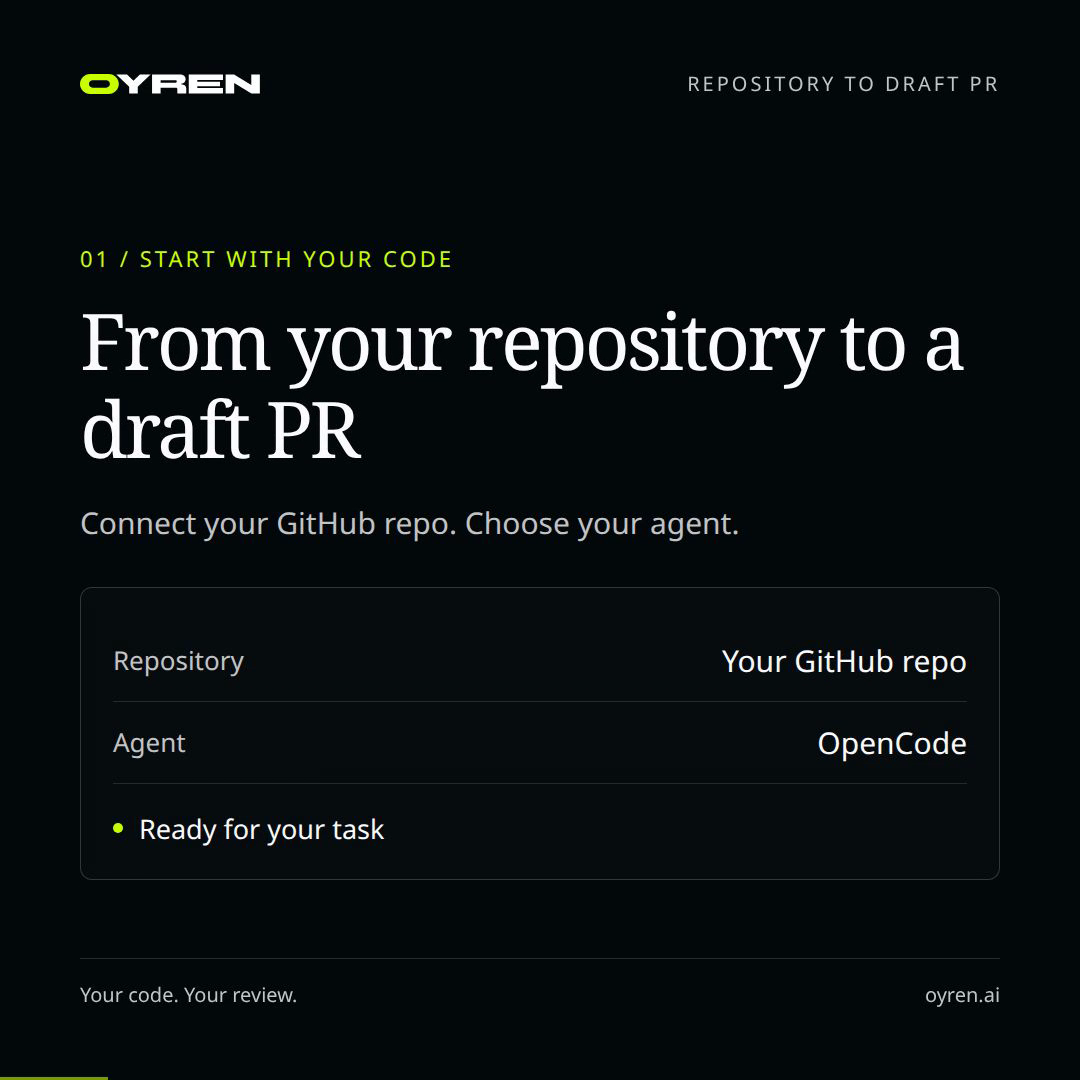
A Codespace provides a terminal and VS Code in the browser. Prompt to Codespace can also take a task with selected repositories and a coding agent: Claude Code, Codex CLI, opencode, Cursor CLI or Qwen Code, with Antigravity available from the terminal. The agents write and edit code from the task instructions.
The codespace is a Linux machine with access to install project tools. Agent sign-ins or API keys are supplied separately. Files and terminal commands remain available for direct inspection or changes. For proof work, the Lean 4 and Mathlib add-on is available on medium codespaces and larger sizes.
Running apps, review and machine costs
Every codespace has a public URL. The Public site panel points that URL at the port where the app is running. Opening the link provides the result a visitor can reach. The board and notes remain the place to record the changes needed after that review.
Runtime is billed by the hour while the codespace runs. A snapshot supports stopping the machine and returning later; snapshot storage is billed monthly in credits. Runtime and snapshot costs form part of the app plan, alongside any AI usage or API keys used for the work.
Questions about editable code built from an app idea
- Do I have to write the code myself?
- A coding agent writes code from the task description. The result still needs review against the brief. The codespace includes a terminal and VS Code in the browser for inspecting files or making changes directly.
- Which coding agents can I use?
- Claude Code, Codex CLI, opencode, Cursor CLI and Qwen Code are launch choices, with Antigravity available from the terminal. Agent sign-ins or API keys are supplied separately, and project tools can be installed on the cloud machine.
- How do I run the app and pause the machine?
- The Public site panel points the codespace’s public URL at the running app. Runtime is billed by the hour while it runs. A snapshot supports stopping and returning later; snapshot storage is billed monthly in credits.